Latest News

Explore our feature stories, opinion articles, and press releases.
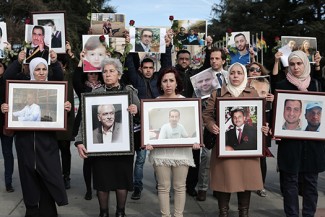
For the past few months, ICTJ, along with our partners at the Center on International Cooperation at New York University, has been working on a comprehensive new policy paper on the situation of the many thousands of Syrians detained somewhere in the country’s vast network of prisons. The depravity that goes on inside these detention sites is already so appalling that it would have been hard to imagine when we started the project that the situation for the prisoners could get any worse. And then the COVID-19 pandemic hit, upending all of our preconceptions, and our lives, in ways none of us ever expected.
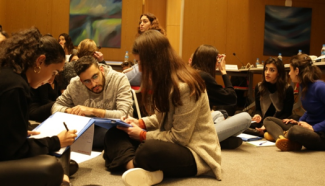
ICTJ held a two-day workshop on transitional justice for a group of university students in Beirut on February 14 and 15 as part of its ongoing support to the Committee of the Families of the Kidnapped and Disappeared in Lebanon. The students are currently serving as volunteers on a project to create an archive of the committee’s decades-long struggle and activism.
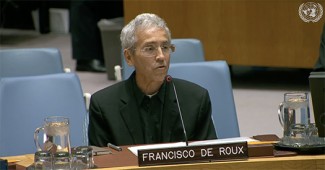
The United Nations Security Council has considered transitional justice on several occasions in the past and included many of its components in country-specific resolutions, and also stressed the links between transitional justice and the other items on its thematic agenda including women, peace and security, and children and armed conflict, and it has made explicit reference to transitional justice as a key part of efforts to sustain peace. Yet, on February 13, the Security Council held its first open debate focusing solely on transitional justice.
Youth activists in Tunisia have played a vital role in keeping corruption at the center of public debate since the country's revolution in 2011. Through decentralized, nationwide protest movements, young Tunisians have been calling for measures that root out systems of endemic corruption. ICTJ sat down with one youth leader to discuss her activism and views on Tunisia's transitional justice process.
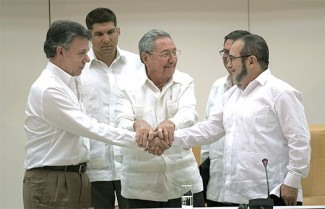
New York—On February 26, ICTJ and NYU Law’s Center for Human Rights and Global Justice will welcome former President of Colombia and Nobel Peace Prize Laureate Juan Manuel Santos for a conversation on the role of transitional justice in peace negotiations.
Eminent human rights defender José Zalaquett passed away on February 15. “Pepe,” as he was known by many, helped pioneer the field of transitional justice and inspired countless human rights defenders around the globe.
As subscribers, you enjoy timely commentary on what’s happening in transitional justice around the world written by one of our experts exclusively for our monthly World Report newsletter. In this month’s edition, we bid farewell to 2019 by looking back on the experts’ choices of the past year.

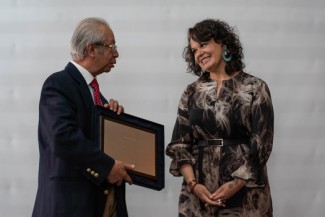
On December 12, ICTJ’s head of office for Colombia María Camila Moreno received the Alfonso López Michelsen Award for her dedicated work to advance peace and uphold international human rights and humanitarian law.

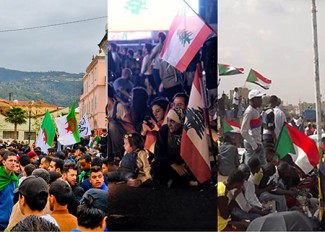
Lebanon’s ongoing “October Revolution” represents the largest decentralized, anti-government protest the country has seen at least since the end of the civil war in 1990. The demonstrations have brought thousands of Lebanese to the streets to condemn widespread corruption among the political class, paralyzing the country for weeks.

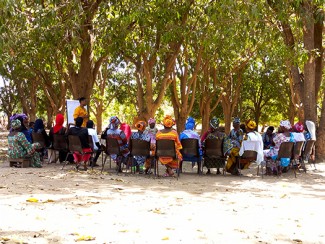
Banjul, The Gambia, December 11, 2019—Women from three rural areas of the Gambia will submit a report to the Truth, Reconciliation and Reparations Commission (TRRC) on December 16 that describes their experiences of sexual and gender-based violence during the dictatorship of former President Jammeh and the impact of the violations on their lives and families. In the report, the women join voices to offer recommendations to the TRRC and the Gambian government.